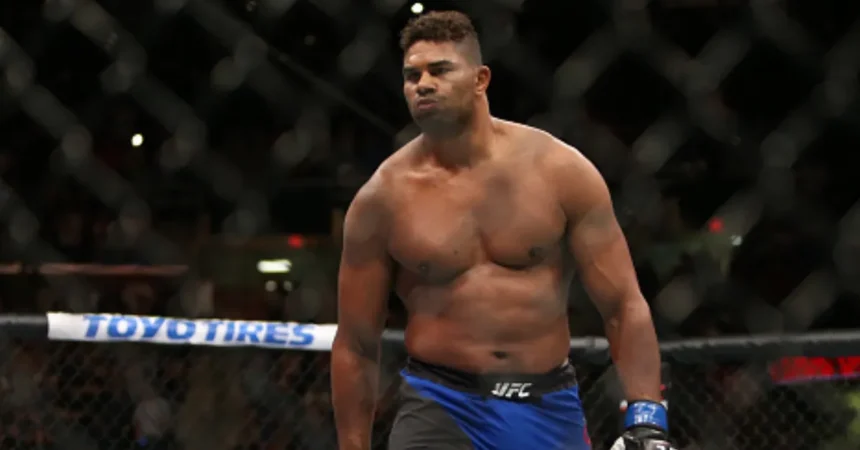
Alistair Overeem thinks the UFC heavyweight division has thinned out, and a look at the names and rankings over the last 15–20 years backs up his point more than it challenges it.
Alistair Overeem and fans question the state of UFC heavyweight division
Speaking recently in an interview with Kyle Diamond of Bloody Elbow, Alistair Overeem argued that the modern heavyweight field has lost the depth that once defined it, saying there “used to be 15–20 top-name heavyweights” and that this is “no longer the case,” while adding that the elite at the top are still strong.
This view fits with how he has talked about heavyweight cycles in the past. Back in 2011, when he was moving into his own title run, Overeem said he felt the level of competition was similar to 2005 but that the pool of top names had already shrunk, estimating “there were more of them…16, now there are eight.”
Coming from a fighter who has lived through PRIDE, Strikeforce and the UFC eras and fought opponents from Brock Lesnar to Stipe Miocic and Sergei Pavlovich, his comments carry weight with fans already skeptical about the current rankings.
Between roughly 2008 and 2015, heavyweight discussions routinely involved Fedor Emelianenko, Cain Velasquez, Junior dos Santos, Fabricio Werdum, Alistair Overeem, Stipe Miocic, Brock Lesnar, Shane Carwin, Antonio Rodrigo Nogueira, Frank Mir and Mirko Cro Cop, alongside strike-heavy threats like Mark Hunt and Roy Nelson and rising names like Travis Browne.
The complaints for modern heavyweight MMA start once you move further down the rankings. Recent breakdowns of the roster and rankings highlighted that veteran contenders such as Derrick Lewis, Marcin Tybura and Tai Tuivasa continue to occupy spots in the top 15 despite long spells of inconsistency.
Bloody Elbow, for instance, recently argued that the division has moved beyond “shallow” and “hit rock bottom,” pointing to slow, low‑output fights and a lack of new blood behind the top two or three fighters.
Yahoo Sports described the current heavyweight scene as a “god‑awful sinkhole,” using recent bouts involving Rizvan Kuniev and Tai Tuivasa as examples of fights that lacked urgency and conditioning, and noting how far that feels from the time when the promotion could stack an entire main card with heavyweights and still sell it as a marquee event.
Put side by side, the contrast is straightforward. The earlier era offered multiple champions in or near their prime at the same time, an influx of crossover names from PRIDE and Strikeforce, and a top 15 where almost every opponent felt dangerous.